Why It's Failing
The City's plan manages you, not coyotes.
Wave a garbage bag. Carry a whistle. Brandish a cane. That is the official aversion advice: for you to perform, on a wild predator, personally, in the moment.
Low-intensity hazing means non-aggressive, non-projectile. It is what Toronto relied on for months in Liberty Village while attacks continued, and the official position throughout was that it was working.
The evidence says otherwise, and the City has been told.
Hazing produces measurable avoidance only when it is applied consistently and intensively, in the early stages of habituation. Even then the effect is short-lived and depends on the individual animal and the circumstances. Once a coyote shows persistent daytime activity in busy areas, repeated close approaches, stalking, predatory attacks on dogs, or unprovoked aggression toward people, there is no robust evidence that hazing reverses any of it or meaningfully reduces the risk. Continued reliance on it past that point is, in the authors' phrase, policy drift beyond the tool's demonstrated limits.
Toronto's version is worse than the evidence supports.
The City uses graduated hazing. Residents start soft with intensity that should escalate later if at all. The research points the other way: hazing should be high-intensity at the onset of habituation, not ramped up gradually. Graduated hazing may be counterproductive. High-intensity hazing is rarely specified in municipal policy and is sometimes actively discouraged.
So the City chose the weakest version of a tool that doesn't work on serious cases, assigned it to the public, and kept using it after the behaviour had escalated past anything it could address.
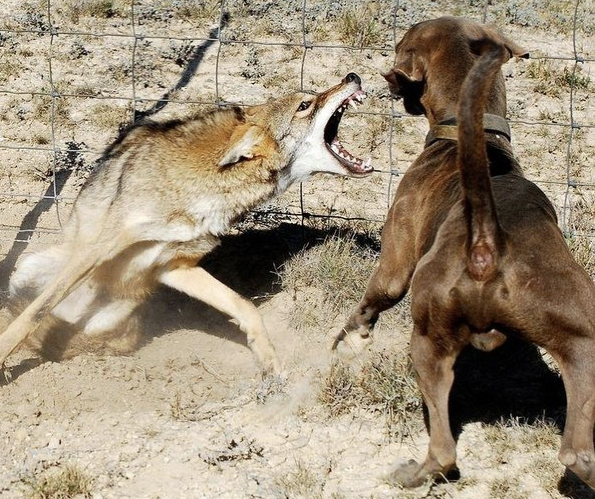
It offloads the risk onto whoever is standing there.
This is the structural failure. A duty of care owed by the municipality was converted into a set of instructions issued to residents. The people who bear the consequences of that transfer are not evenly distributed: they are the people walking small dogs, the people with young children, the people who have to cross that park at that hour. The published critique names this: coexistence policy that shifts risk onto vulnerable groups.
Nobody was checking whether it worked.
Hazing was outsourced to private contractors, with no independent evaluation of efficacy. In food safety inspection and financial auditing, the party doing the work is deliberately not the party certifying the work. That separation exists to preserve credibility. Here there was none. The City reported positive outcomes from increased hazing while conflict reports kept coming in.
Meanwhile the City's own incident data was released weeks late, which meant residents could not see the pattern in time to protect themselves. They built their own reporting system to compensate. A framework with no thresholds needs less information to run, so it generates weaker incentives to collect good data. And that is exactly what happened.
The expert panel came too late to function as one.
By the time it was convened, incidents had been escalating for months. Rather than assess incidence data against predefined behavioural markers, the panel worked reactively under intense public scrutiny, and its composition and objectivity were questioned. Its recommendation was to augment low-intensity hazing, with lethal control reserved as a last resort. Weeks later, the City euthanized two coyotes and the attacks stopped.
The people who wrote it sell it.
Toronto's coyote education module was built in partnership with an outside advocacy group. The same group receives City contracts. We think that is worth a question. Because when the party that shapes the policy also delivers the service the policy mandates, there is no arms-length check anywhere in the chain.
And nothing has been fixed.
Toronto's revised Coyote Coexistence and Response Strategy retains graduated hazing and administrative discretion in place of predefined escalation thresholds. It contains no evidence of fundamental reform on the two things that caused the failure ~ indecision and delay.
Source: Murray, Foucault & Patton (2026), Frontiers in Ecology and Evolution 14:1885888 — https://doi.org/10.3389/fevo.2026.1885888
2026
- Are cities going too easy on coyotes? One researcher thinks so — CBC, Jul 24
- 'There was a coyote in my bed': Toronto family recounts 'very stinky' encounter with urban wildlife — CTV, Aug 6
- 2-year-old bitten, seriously injured by coyote in Whitby, Ont., police say — CBC, Jul 6
- Coyote bites child in head during attack near Toronto, retreats to woods — Global, May 25
2025
- Toronto dog owners' clashes with coyotes add teeth to old debates about urban wildlife — Globe and Mail, Sep 9
- Toronto's growing wildlife problem could get a dedicated response team — CBC, Jul 10
- City euthanizes pair of coyotes in Liberty Village — TorontoToday, May 13
- Problem coyotes should only be killed as last resort, expert panel tells City of Toronto — CBC, Mar 19
- Toronto stepping up efforts to address 'unprecedented' coyote attacks in Liberty Village, Fort York areas — CP24, Mar 18
- 'Unprecedented' rise in coyote attacks prompts Toronto's deputy mayor to pitch urgent action plan — CBC, Feb 26
- Toronto communities urge action after rise in reported coyote attacks and sightings — Global, Jan 31
2024
- Coyote attack on dog in Liberty Village leaves woman shaken — CBC, Nov 25
- 'We have a problem:' Ontario man recounts his beloved dog being in grips of coyote — Global, Jul 9
- Toronto residents fearful and fed up after dogs attacked by coyotes — Global, Jul 3